
Interior Design in Santa Monica
Serving 90401 · 90402 · 90403 · 90404 · 90405 and Venice, Brentwood, Pacific Palisades
Santa Monica interior design splits into two very distinct project types: a rent-stabilized building tenant-improvement scope on a pre-1979 unit, and a contemporary condominium interior in a newer mid-rise or low-rise building. Both live under the City of Santa Monica CPCD permit process rather than LADBS, and both carry HOA-or-tenancy coordination layers that shape the delivery calendar. Design Onn Point handles both lanes and treats them as different projects from intake.
Real projects. Real prices.
73 finished remodels published with their final price — nothing hidden.
What our finished LA work actually cost: 27 kitchens ran $23k–$84k, median $50k; 28 bathrooms $28k–$105k, median $38k; 17 whole-home remodels $36k–$440k, median $150k. Real final prices from our own job records, not estimates.
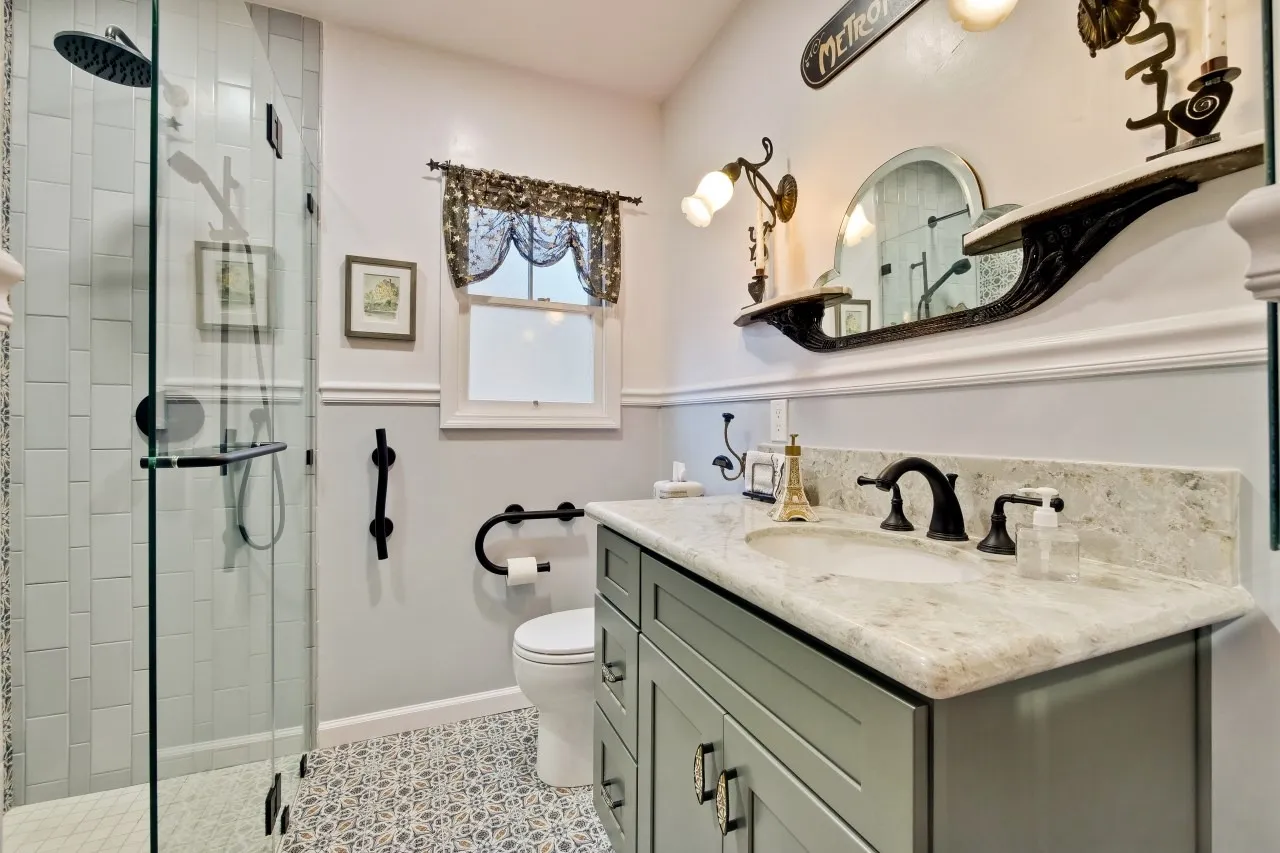 $35,000
 A patterned encaustic-look floor, a sage shaker vanity and a glass shower with a tiled bench.
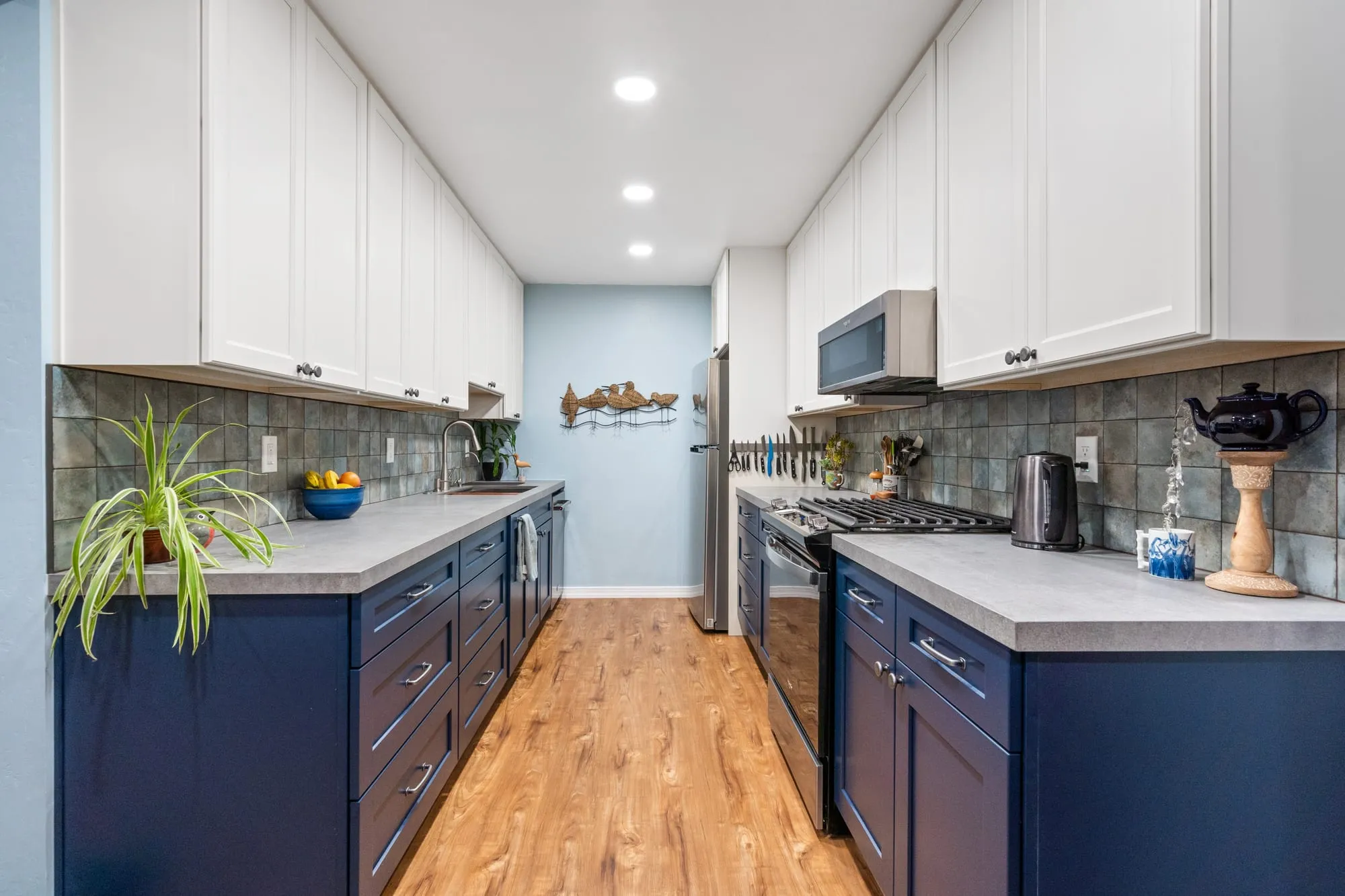 $50,000
 Navy shaker lowers under white uppers, with a slate-tone tile backsplash and a wood ledge shelf.
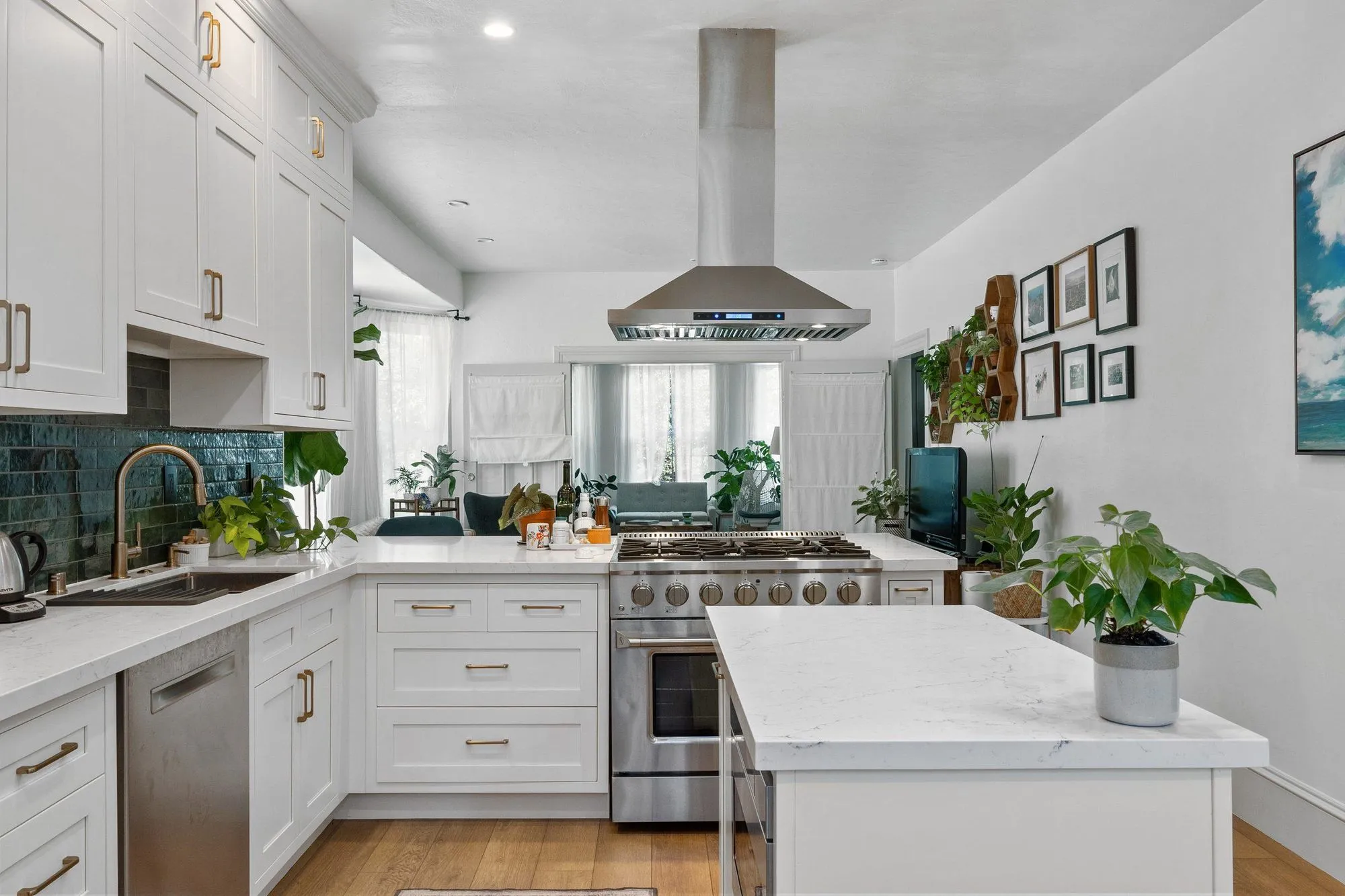 $72,000
 White shaker cabinetry against a deep teal backsplash, with an island under a stainless hood.
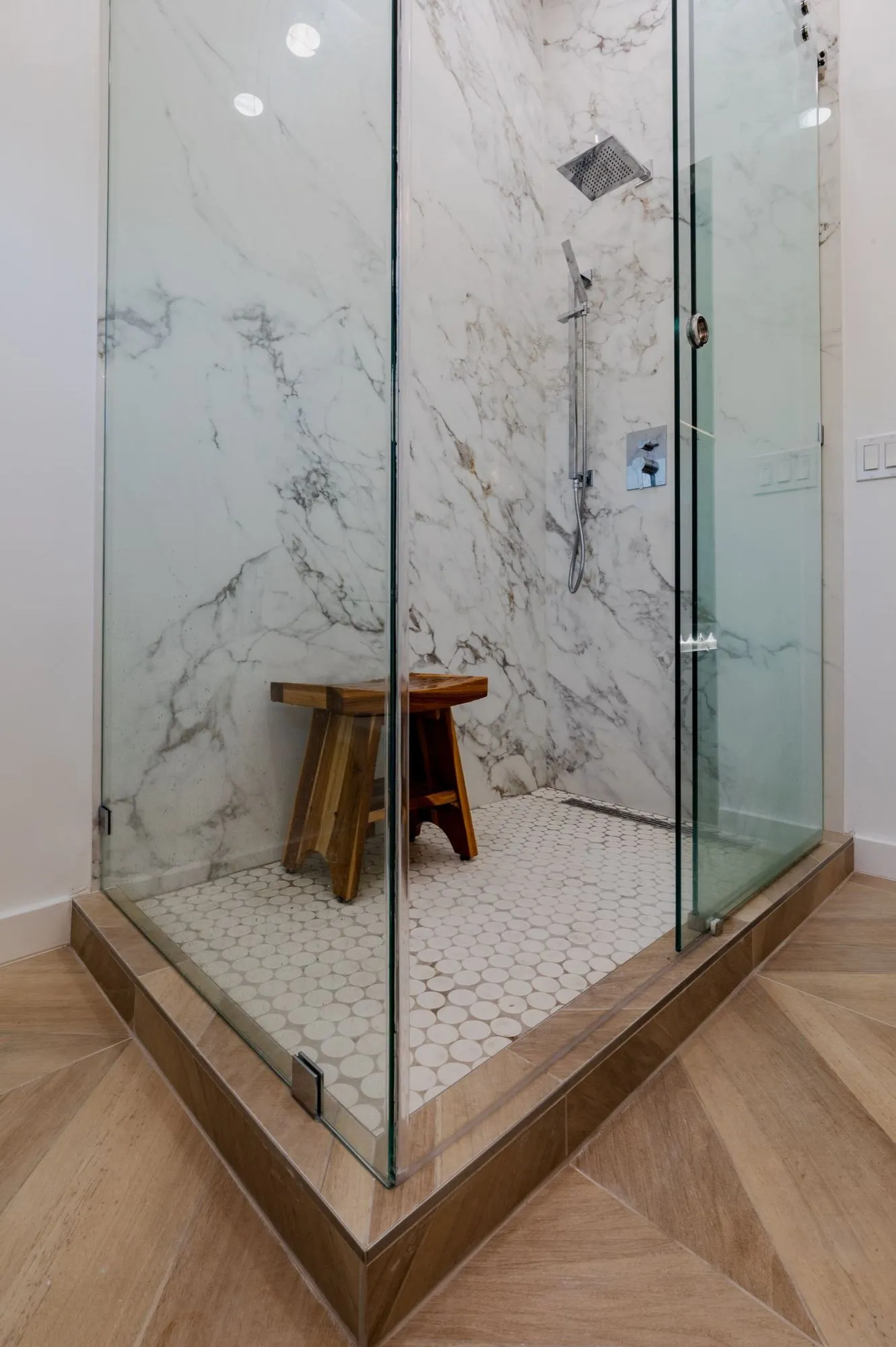 $105,000
 Marble-veined slab walls, a frameless glass shower, and patterned tile floors.
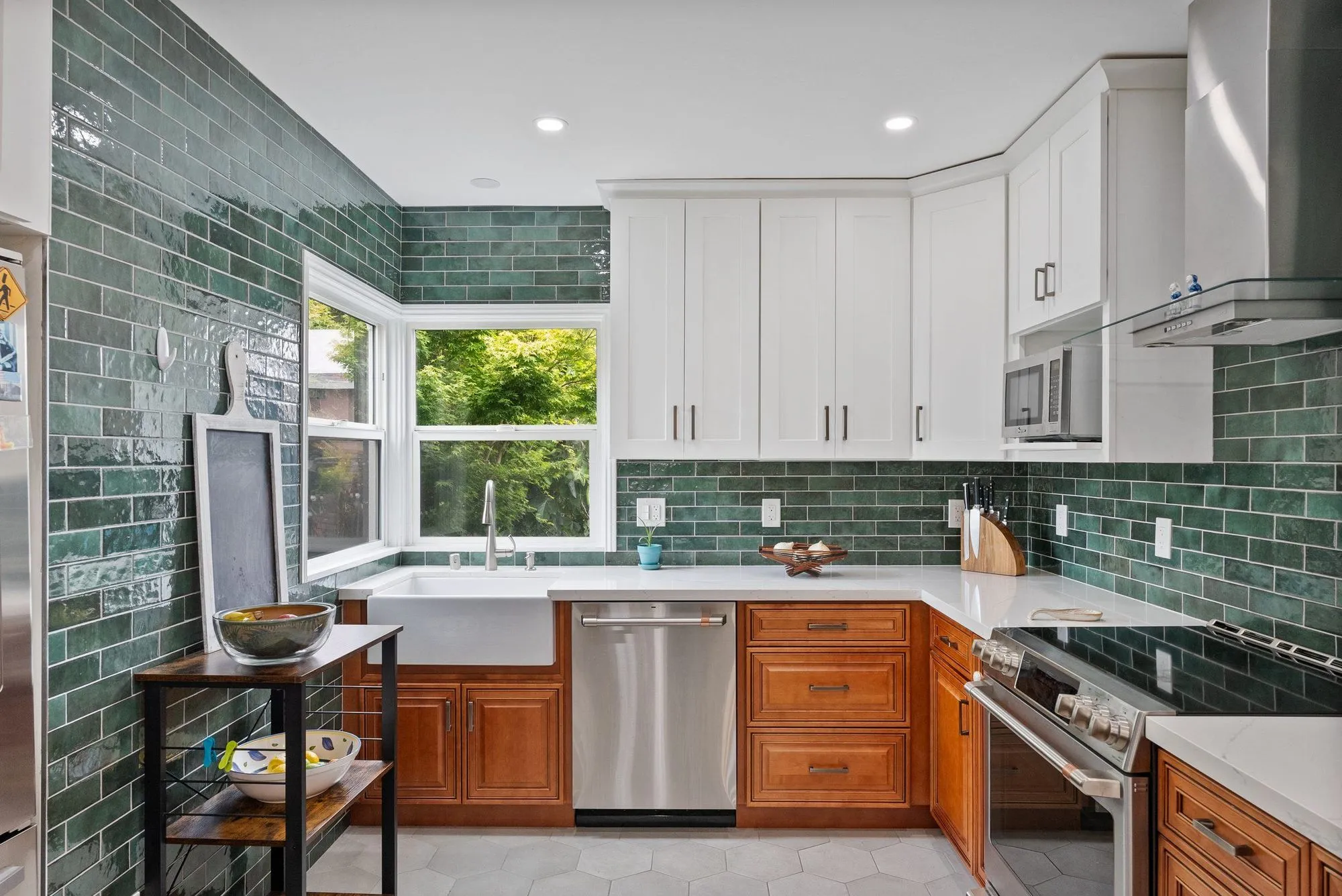 $237,000
 Deep green tile floor-to-ceiling, a farmhouse sink, living space open to the patio.
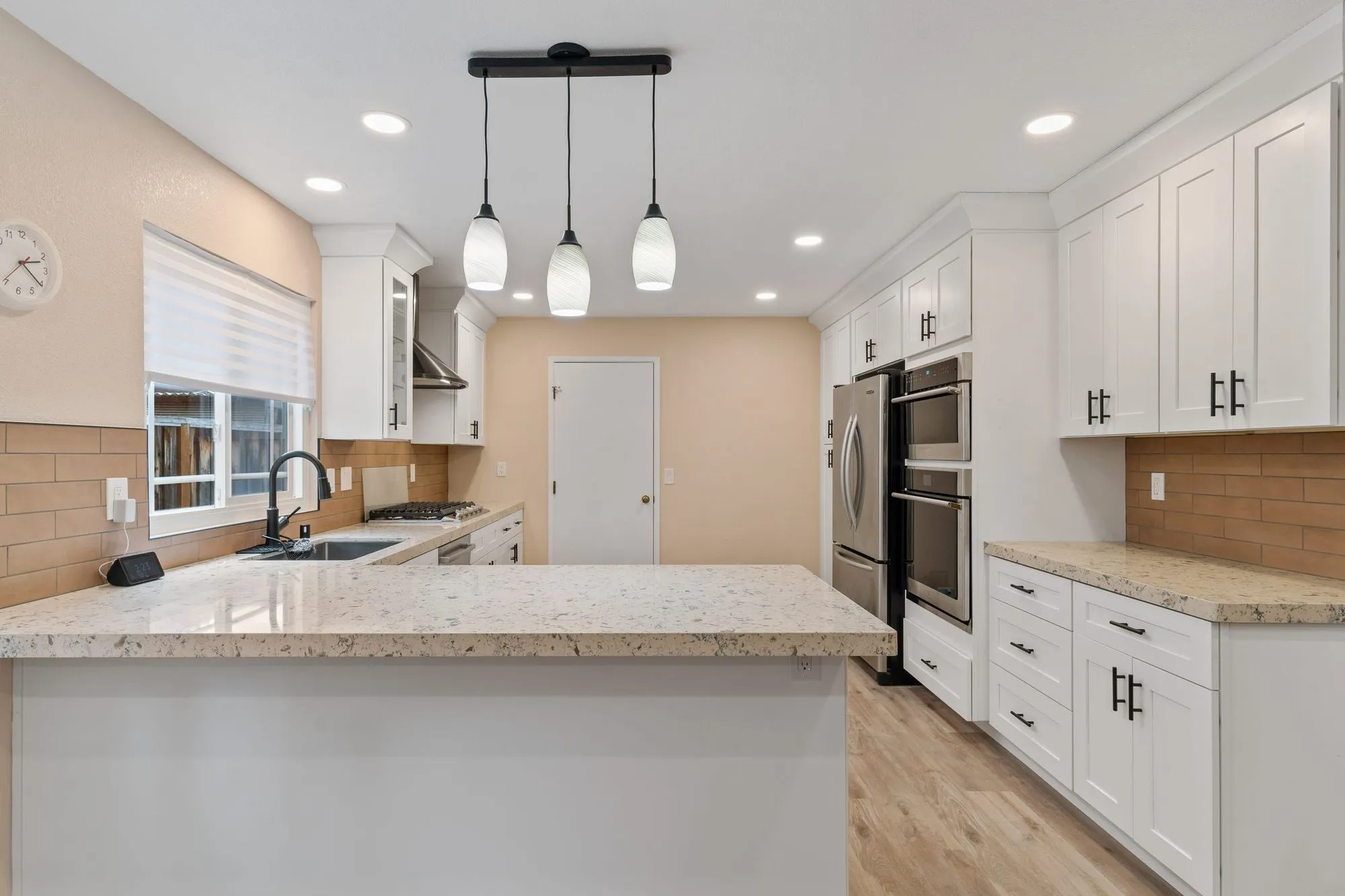 $279,000
 White shaker cabinetry, granite counters, and a tan subway tile backsplash.
Santa Monica interior design — the RSO and condo lanes
Rent-stabilized building tenant-improvement compliance
Interior design work on a Santa Monica pre-1979 rental unit — where either the owner is remodeling a currently-tenanted unit or a landlord is refreshing a vacant one — runs under the city's rent-stabilization framework. That framework governs what improvements can be made, what notice is required to a sitting tenant, and how rent changes (if any) map to the improvements. We coordinate with the property owner's attorney and the tenant notice process before design finalization so nothing lands sideways.
Contemporary condo procurement and elevator-scheduled delivery
Contemporary Santa Monica condominium interiors run on the building's HOA calendar. Freight-elevator reservations are typically booked 2-4 weeks in advance, with limited daily windows (often 8am-noon or 1pm-5pm on weekdays only). Large upholstery, stone slabs, and full-room deliveries have to fit inside those windows. Design Onn Point calls each building's HOA management for freight-elevator availability before committing to a delivery date.
HOA move-in windows and daily install cadence for condo work
Beyond freight-elevator scheduling, condominium HOAs typically limit contractor work hours (often 9am-5pm weekdays, no Sundays), require certificates of insurance from every vendor entering the building, and sometimes require a security deposit against elevator wear or common-area damage. Interior-design install crews — painters, upholsterers, drapery installers, art hangers — all fit inside that framework. We supply COIs and schedule around HOA rules from week one.
The separate-city CPCD permit path when construction joins the scope
If the interior-design brief touches walls, plumbing, electrical, or ceilings, the scope pulls out of pure design and into the City of Santa Monica CPCD permit process. That's a different intake counter than LADBS, different plan-check timelines, and different corrections cycles. Design Onn Point runs the CPCD submittal directly rather than handing it off, so the permit calendar and the design calendar stay in sync.
Coastal zone submissions west of 4th Street
For parcels west of 4th Street, exterior-envelope-touching scope inside an interior-design engagement — window replacement in a different size, balcony treatment, exterior door changes — can trigger California Coastal Commission review layered on the CPCD permit. That review adds 6-12 weeks typically. We check parcel status against the coastal line at intake.
The Santa Monica client conversation: TI plus condo-owner mix
Santa Monica interior-design clients split roughly between owner-occupiers doing a full unit refresh, landlords managing a rent-stabilized unit turnover, and condo owners preparing a mid-rise unit for either long-hold living or short-term rental. The design brief and the procurement tier vary sharply across those three reference sets. Design Onn Point identifies which category the client sits in at the first call and scopes accordingly.
Salt air and the marine layer are material constraints, not mood
Close to the beach, unlacquered brass takes on a patina in months rather than years, untreated iron pits, and a west-facing window treatment fades on its ocean side first. The marine layer keeps early-summer mornings grey, which flattens the cool palettes that photograph beautifully inland. So coastal engagements get finishes specified for salt-air exposure, and every fabric and paint candidate is checked under an actual overcast morning sky — not just showroom light — before the order is committed.
Where the +10-20% Santa Monica design premium comes from
Interior design in 90401 through 90405 sits in the +10-20% band above the LA baseline. The lift breaks into the CPCD separate-city permit calendar (when construction is part of the scope), the RSO compliance overhead on rent-stabilized work, HOA coordination and freight-elevator scheduling on condo work, and Coastal Commission review calendar when it applies. Line-itemed honestly, not a flat markup.
Written by Onn Cohen-Meguri, founder and designer at Design Onn Point — 12+ years in business, 1,200+ finished Los Angeles projects. CSLB #1133368.
What's different about interior design in Santa Monica
Santa Monica ID often centers on coastal-bungalow restoration
A typical Santa Monica ID engagement involves modernizing a 1920s-40s bungalow interior while preserving or restoring period elements: original wood floors, fireplace tile, original windows, built-in cabinetry. The aesthetic is restored-with-modern-comfort rather than gut-renovation. We source period-appropriate finishes (cement tile, traditional cabinetry profiles, vintage-style lighting) alongside contemporary upholstery and rugs so the home reads as its era while functioning for current daily life.
Coastal-modern aesthetic dominates SM client preferences
Santa Monica client preferences trend toward coastal-modern aesthetic: neutral palettes, natural materials, indoor-outdoor connections, layered textures (linen, sisal, oak). Bold color and heavy traditional schemes are less common. The native bungalow architecture pairs naturally with this aesthetic — we work with the house's inherent character rather than imposing a different design language.
Salt-air drives material durability spec
Santa Monica ID material selection accounts for salt-air and humidity within a mile of the ocean: higher-grade leather, marine-grade or PVD-coated metals, properly-sealed wood floors, and humidity-tolerant rugs. Pure natural-fiber rugs and untreated leathers show wear faster within the coastal-influence zone. The aesthetic stays unchanged from inland design; the durability spec is meaningfully tighter so the home holds up for its full design lifespan.
Pricing in Santa Monica
Market estimate, not our own project data.
Talk to Onn about your Santa Monica interior design.
Free consult, no obligation. Onn reads every inquiry personally — and aims to reply within one business day.
From the blog
Open-Concept vs Galley: Which Kitchen Layout Fits?
Open-concept kitchens dominate design magazines, but they aren't right for every home. When to keep walls and when to take them down.
Quartz vs Granite vs Marble: 2026 Kitchen Countertop Guide
How the three most popular kitchen countertop materials compare on durability, maintenance, cost, kosher kitchen use, and LA availability — with 2026 LA pricing.
Designing a Kitchen That Holds Resale Value in West LA
What appraisers and buyers in West LA look for in a kitchen, what gets overdone, and how to balance personal style with broad appeal.